This question gets asked around four thousand times a month, and it almost always gets answered badly — either with a flat yes from somebody selling something, or a flat no from somebody who has confused the technology with the way some people use it. The real answer is not complicated, but it does have two halves.
Short answer
IPTV is completely legal. It is simply television delivered over the internet, and services like YouTube TV, Sling, Fubo and BBC iPlayer are all IPTV. What can be illegal is a specific provider that resells channels it holds no rights to. The technology is never the problem — the licensing is. This article is general information, not legal advice.
IPTV is a delivery method, not a business model
IPTV stands for Internet Protocol Television. That is all it means: video delivered over an internet connection instead of through an aerial, a satellite dish or a cable. It describes the pipe, not what flows through it.
By that definition, an enormous amount of ordinary television is IPTV. YouTube TV is IPTV. Sling, Fubo and DirecTV Stream are IPTV. So is BBC iPlayer, so is your telecoms provider’s TV package, and so is the app your football league sells you directly. Nobody has ever been in any trouble for using any of them.
This is why the question "is IPTV legal" cannot be answered as asked. It is a bit like asking whether email is legal. The technology is neutral and universal; what matters is what a particular service is doing with it.

The line that actually matters: rights
Television content is licensed. A broadcaster pays for the right to show a match, a film or a series in a particular country for a particular period, and that right is what they are selling on to you.
A legitimate IPTV provider is a business that either holds those rights or has an agreement with somebody who does. An illegitimate one takes existing broadcast feeds and resells access to them without permission. Both look identical from your sofa — same app, same login, same channel list — which is exactly why so many people genuinely do not know which they are using.
So the useful question is not "is IPTV legal" but "does this service have the right to sell me this content". That question has an answer, and there are practical ways to work it out.
Where the law stands
Details differ by country, but the shape is remarkably consistent: enforcement is aimed at the people running and selling unlicensed services rather than at individual viewers.
| Country | How it is treated | Enforcement focus |
|---|---|---|
| United States | Copyright infringement; large-scale illicit streaming is a felony | Operators and sellers |
| United Kingdom | Copyright and fraud offences | Sellers, and some resellers |
| Canada | Copyright infringement, with court-ordered blocking | Operators and ISP-level blocks |
| EU | Copyright infringement, varies by member state | Operators, with growing blocking orders |
In the United States, the Protecting Lawful Streaming Act of 2020 made operating a large-scale illicit streaming service a felony rather than a misdemeanour. It was written specifically to target the people running commercial operations, and prosecutions have followed that pattern.
In the United Kingdom, prosecutions have been brought against people selling subscriptions and preloaded boxes, generally under copyright and fraud legislation, and sports rights holders have obtained blocking orders that make unlicensed streams unreliable during live fixtures. In Canada, courts have issued site-blocking orders requiring ISPs to block specific unlicensed services.
What you will notice across all of it: the enforcement energy goes into operators and sellers. Individual viewers are far more likely to encounter an ISP warning letter, a blocked domain, or a service that simply stops working mid-match than anything more serious. That is a description of how enforcement has worked in practice, not a promise about your situation — laws and priorities change, and they differ where you live.
How to tell whether a provider is legitimate
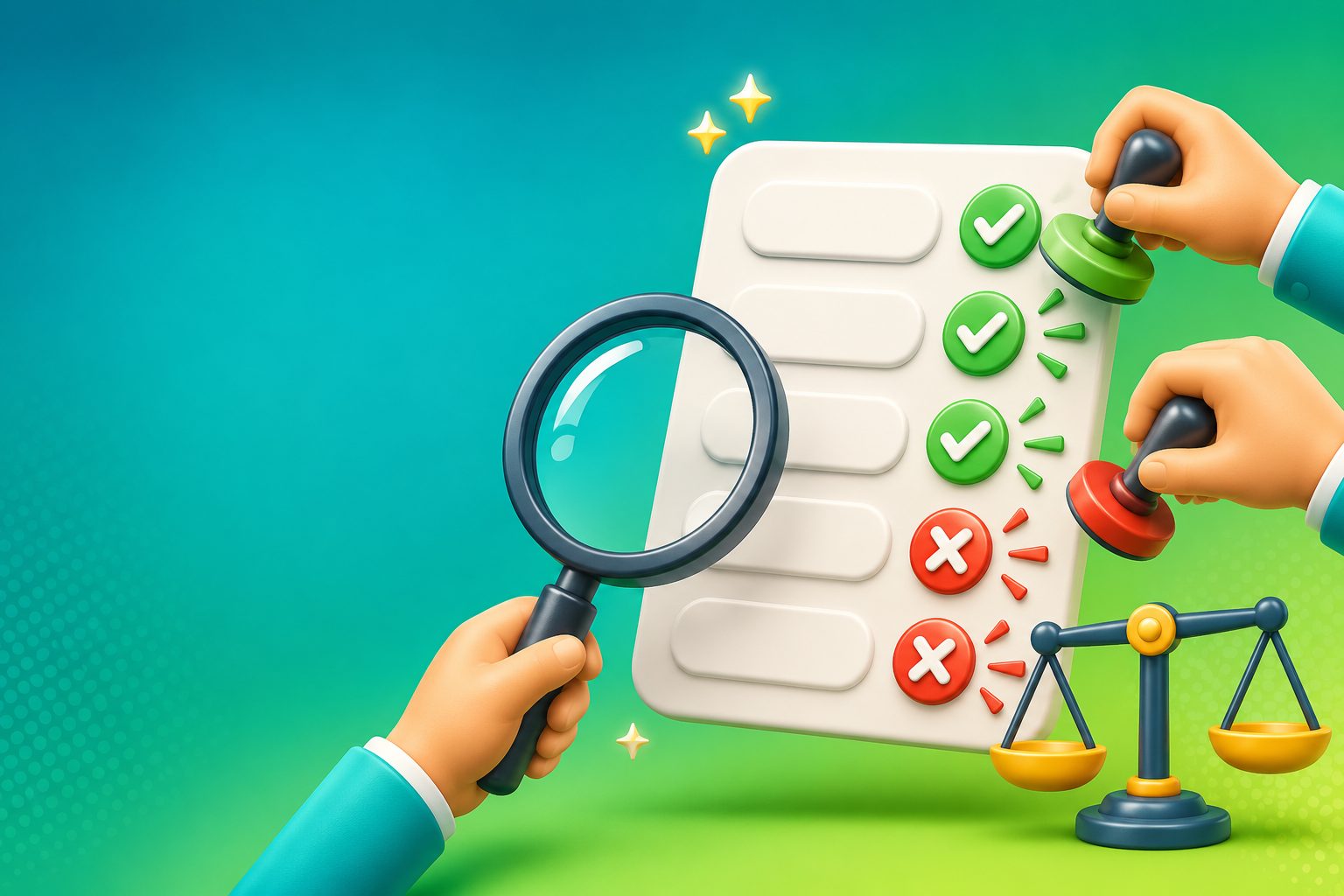
You cannot check a licence directly. But rights cost money, and money leaves traces, so a handful of practical signals get you most of the way there.
- The price against the catalogue. Sports and premium film rights cost broadcasters enormous sums per market. A service offering every premium channel from every country for a few dollars a month is not paying for them. This single check tells you more than all the others combined.
- A real company behind it. A registered business name, a physical address, terms of service, a refund policy, a privacy policy. Licensed operations have these because they are legally required to. Anonymous ones do not have them because they cannot.
- Normal payment methods. Card payments and mainstream processors involve identity checks and chargeback exposure. A service that only accepts cryptocurrency or gift cards is avoiding that, and the reason is rarely a good one.
- How it is sold. Legitimate services advertise openly and are reachable at a public address. Services sold through social-media direct messages, disappearing groups and constantly changing domain names are telling you what they are.
- How the channels are described. "Every channel in the world" is not a licensing model. Real services list what they actually carry, region by region, because that is what they bought.
Rights cost money. If the price could not possibly cover the licensing, the licensing is not there — no matter how professional the website looks.
Is it safe, though?
Legality and safety are different questions, and the second one is where most people are actually exposed. Two risks are worth understanding.
The apps and files. Players like VLC and IPTV Smarters are ordinary software. The risk is not the player, it is where the file came from — an APK from a forum mirror can be repackaged with anything, and it will install and run exactly as expected. Always take the download from the official site or your provider. Our Firestick install guide covers doing that properly.
The payment and the data. Handing card details to an anonymous operator with no company details, no terms and no support address carries the obvious risk, and there is no chargeback conversation to be had afterwards. This is the part people underestimate: the realistic downside of a dodgy service is usually losing money and having your evening ruined, not a knock at the door.
A VPN, incidentally, changes none of this. It hides traffic from your ISP; it does not convert an unlicensed service into a licensed one, and it costs you speed while you use it.
What about free IPTV?
There are genuinely free, entirely legal IPTV streams — public broadcasters, government channels, community stations, and a growing number of free ad-supported services that carry proper licensing and pay for themselves with advertising.
Then there are the free playlist collections passed around forums and code-sharing sites, packed with premium channels. Those are the same unlicensed feeds discussed above, minus even a pretence of a business. They are also unreliable by nature: the links rot within days, and the collections themselves are a well-known route for malicious files.
The distinction is simple enough. If a broadcaster is deliberately giving its own channel away, that is free and legal. If a premium channel somebody pays a fortune to license is being handed out for nothing, somebody in that chain did not agree to it.
Why the licensed services cost more and carry less
It helps to understand the economics, because once you do, the pricing on every service you look at starts telling you something.
Rights are sold per territory and per period. A broadcaster buys the right to show a league in one country for three years, and pays a sum that has to be recovered from subscribers in that country. That is why the same match is on different channels either side of a border, why a service that works at home stops working on holiday, and why blackouts exist at all — none of it is a technical limitation, it is the shape of the contracts underneath.
It also explains the two things people find most frustrating about legitimate services: they cost real money, and no single one of them carries everything. Nobody holds every right in every market, so a full picture means several subscriptions. That frustration is exactly the gap unlicensed services sell into, and it is why the offer is always framed the same way — everything, everywhere, for one small price.
So when you are weighing up a provider, do the arithmetic rather than reading the marketing. Add up what the channels in the list would cost through official routes in your country. If the answer is several hundred a year and the service asks for thirty, you have learned something concrete about where those channels came from.
Common misunderstandings
- "IPTV boxes are illegal." Hardware is not illegal. A Firestick, an Android box and a MAG box are all ordinary devices. Selling one preloaded with unlicensed subscriptions is what has been prosecuted.
- "A VPN makes it legal." It does not. It changes who can see your traffic, not what rights the service holds.
- "If it is on an app store it must be licensed." App stores vet apps, not the services you log into with them. The player and the provider are separate questions.
- "Everyone does it, so it is fine." A statement about how likely you are to face consequences is not a statement about legality, and the two get conflated constantly.
- "It is legal because I pay for it." Paying an unlicensed reseller does not create a licence. It just means the money went somewhere.
How to decide for yourself
Nobody can make this call for you, and the honest position is that plenty of people read the same facts and land in different places. What you can do is stop guessing.
- Ask what the service actually claims to hold rights to, and in which countries.
- Compare the price to what those rights would plausibly cost in your market.
- Look for a registered company, a real address, terms of service and a refund policy.
- Check the payment methods — anonymous-only payment is a deliberate choice.
- Search the service name alongside the word "blocked" and see whether it appears in court orders.
- If you want certainty, use a service that is openly licensed in your country and accept the smaller catalogue that comes with it.
And if you are unsure about your own situation, ask somebody qualified where you live. This article is general information about how the technology and the law fit together — it is not legal advice, and copyright law differs meaningfully between countries.
Frequently asked questions
Is IPTV legal in the USA?
The technology is entirely legal — YouTube TV and Sling are IPTV. What is illegal is operating or selling a service that redistributes copyrighted channels without a licence, which the Protecting Lawful Streaming Act of 2020 made a felony. Enforcement has focused on operators and sellers rather than viewers.
Can you get in trouble for watching IPTV?
Enforcement in the US, UK and Canada has overwhelmingly targeted the people running and selling unlicensed services. Viewers are far more likely to see an ISP warning notice, a blocked domain, or a service that stops working. That is how it has worked in practice, not a guarantee — the law differs by country and does change.
How do I know if my IPTV provider is legal?
Compare the price to what the channels would plausibly cost to license, and look for a registered company, real terms of service, a refund policy and normal card payment. Anonymous operators, crypto-only payment and "every channel in the world" claims are the clearest signals in the other direction.
Are IPTV boxes illegal?
No. A Firestick, an Android box or a MAG box is ordinary hardware with entirely legitimate uses. What has been prosecuted is selling devices preloaded with unlicensed subscriptions — the device is not the offence, the service on it is.
Does a VPN make IPTV legal?
No. A VPN hides your traffic from your ISP; it has no effect on whether the service you are using holds the rights to what it sells. It also costs you speed and can make buffering worse.
Is free IPTV legal?
Some of it is — public broadcasters, community channels and free ad-supported services are legitimate and deliberately free. Free playlists full of premium channels are the unlicensed kind, and they are also the least reliable and the most common route for malicious files.
The short version
IPTV is legal. Millions of people pay for it every day through services nobody would question. The only meaningful question is whether the specific provider you are considering holds the rights to what it is selling — and price against catalogue, a real registered company, and normal payment methods will tell you more in five minutes than any amount of forum reading.
If you want to see what the boring signals look like in practice, our plans and terms are published openly, and our setup guides are free to read whether you subscribe or not.